
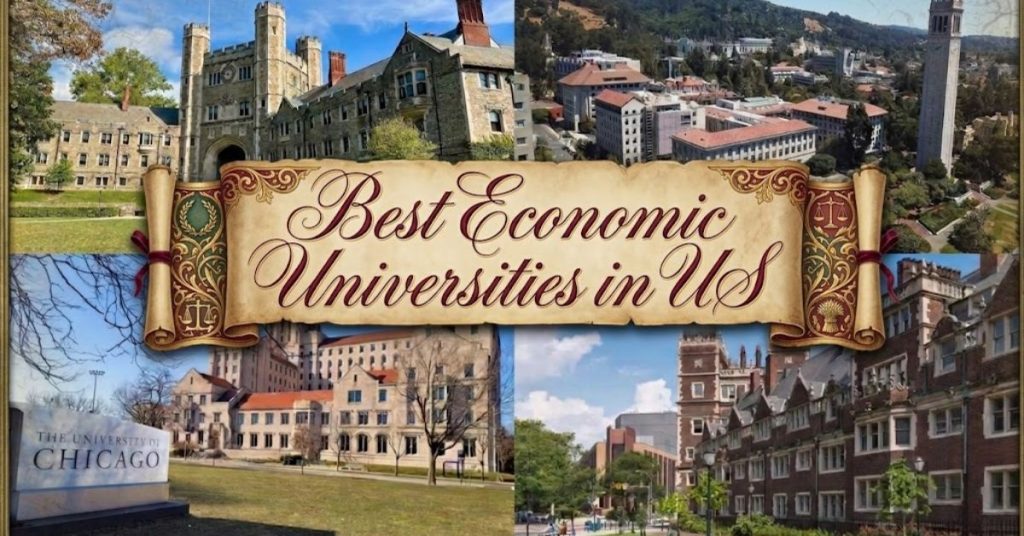
Choosing the right university for economics is one of the most important decisions you’ll make as a student. The university you attend can shape your career, your network, and the opportunities that come your way for decades.
The United States is home to some of the most prestigious economics programs in the world. From Nobel Prize-winning faculty to cutting-edge research centers, these institutions offer students an unmatched academic experience.
In this guide, we’ve broken down the best economics universities in the US so you can make a confident, informed decision about your future.
Quick Answer: Best Economics Universities in US
If you’re short on time, here’s a quick snapshot of the top economics universities in the US:
- Harvard University — Best overall for economics with unmatched prestige and Nobel laureate faculty
- MIT — Best for quantitative and empirical economics research
- Stanford University — Best for economics combined with innovation and entrepreneurship
- University of Chicago — Best for economic theory and free-market tradition
- Princeton University — Best for macroeconomics and personalized faculty mentorship
- UC Berkeley — Best public university for economics with a strong policy focus
- Yale University — Best for interdisciplinary economics and economic history
- Columbia University — Best for finance-focused economists in New York City
- NYU — Best for game theory and macroeconomic theory
- University of Pennsylvania — Best for combining economics with business knowledge
Now let’s dive into each university in detail.
Comparison Table
| University | Location | Notable Specialization | Best For | Career Path | Est. Annual Tuition |
| Harvard | Cambridge, MA | Macro & Development | Global Prestige | World Bank, IMF, Academia | $59,320 |
| MIT | Cambridge, MA | Econometrics & Empirical Research | Data Analytics | Quant Trading, Data Science | ~$59,750 |
| Stanford | Stanford, CA | Tech & Innovation | Entrepreneurship | Silicon Valley, VC | ~$62,000 |
| UChicago | Chicago, IL | Price Theory | Economic Theory | Policy Research, Think Tanks | ~$62,500 |
| Princeton | Princeton, NJ | Macro & Public Finance | Research & Policy | Federal Reserve, Academia | ~$59,710 |
| UC Berkeley | Berkeley, CA | Labor & Applied Economics | Policy Focus | Government, NGOs | ~$14,500 (in-state) / ~$44,000 (out-of-state) |
| Yale | New Haven, CT | Behavioral & Institutional Economics | Interdisciplinary Learning | Consulting, Policy, Academia | ~$62,250 |
| Columbia | New York, NY | Finance & Urban Economics | Finance Careers | Investment Banking, Consulting | ~$63,530 |
| NYU | New York, NY | Game Theory & Macro | Academic & Theoretical Careers | Academia, Research Institutions | ~$58,000 |
| UPenn (Wharton) | Philadelphia, PA | Finance & Business | Wall Street | Investment Banking, PE | ~$63,452 |
Please note: Tuition figures are approximate annual undergraduate tuition fees and may vary based on program, residency status, and year of enrollment. Continuously check the official University site for the most current figures.
Harvard University
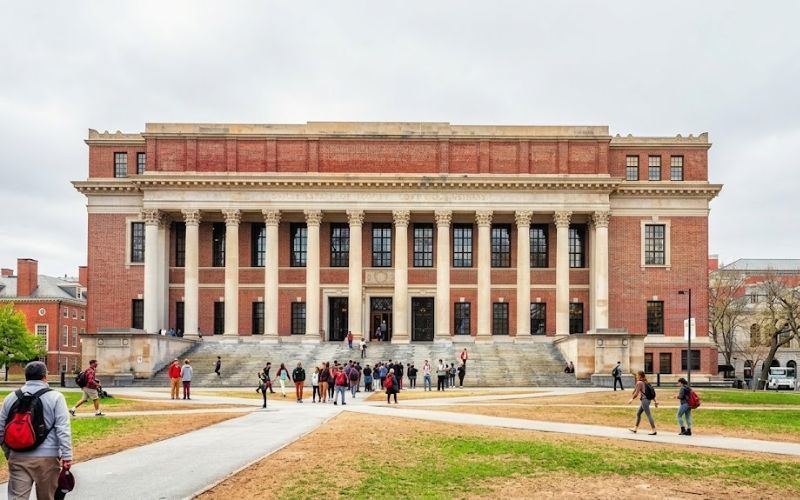
When people think of world-class education, Harvard is almost always the first name that comes to mind, and for good reason.
Harvard University’s Department of Financial matters is reliably positioned among the beat programs all inclusive. Located in Cambridge, Massachusetts, Harvard has produced more Nobel Prize winners in Economics than almost any other institution in the world.
Here’s what you can expect at Harvard’s Economics program:
- A rigorous curriculum covering microeconomics, macroeconomics, econometrics, and economic theory
- Access to the Harvard Institute for Economic Research
- Incredible networking opportunities with alumni in finance, policy, and academia
- Strong PhD program with generous funding packages
- Connections to the Kennedy School of Government for students interested in public policy
Harvard also offers undergraduate concentrations in Economics with flexible course structures, allowing students to tailor their studies toward their specific interests.
Estimated Annual Tuition: ~$59,000
If you’re aiming for the top, Harvard should absolutely be on your list.
Massachusetts Institute of Technology (MIT)
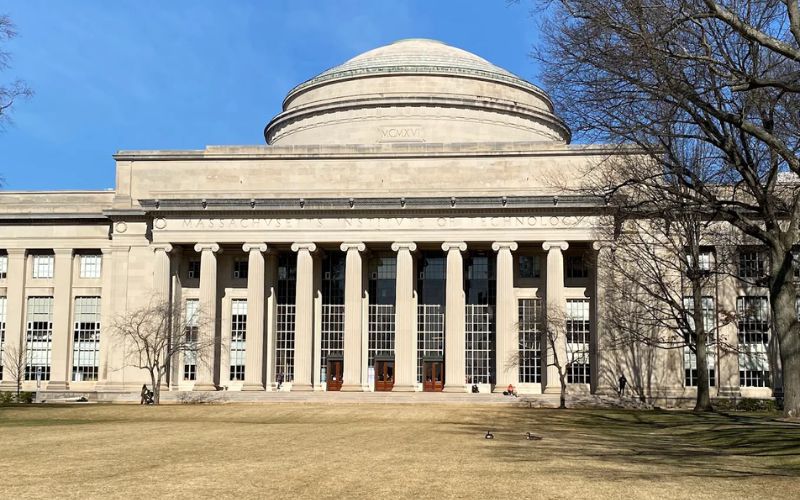
MIT might be best known for engineering and technology, but don’t overlook its Economics department, it’s genuinely world-class.
The Economics department at MIT is one of the most research-intensive programs in the country. MIT economists have been at the forefront of some of the most important economic breakthroughs of the past few decades, including groundbreaking work in development economics by Nobel laureates Abhijit Banerjee and Esther Duflo.
Key highlights of MIT’s Economics program include:
- Heavy focus on empirical research and quantitative methods
- Access to the MIT Sloan School of Management for interdisciplinary learning
- Strong placement record — MIT PhD graduates land positions at top universities and policy institutions worldwide
- Close collaboration between economics, mathematics, and statistics departments
MIT is particularly strong for students interested in development economics, labor economics, and applied microeconomics.
Estimated Annual Tuition: ~$59,750
If you want an economics education that combines rigorous theory with real-world data-driven research, MIT is hard to beat.
Stanford University

Stanford University sits in the heart of Silicon Valley, and that location plays a huge role in shaping its economics program.
Stanford’s Economics department blends traditional economic theory with a forward-thinking, innovation-driven mindset. Students here benefit not just from stellar faculty, but from an ecosystem that connects academia with entrepreneurship, technology, and venture capital.
Stanford’s proximity to some of the world’s most influential tech companies means that students interested in market design, technology economics, and platform economics have incredible real-world opportunities right on their doorstep.
What Stanford’s Economics program offers:
- A strong focus on both theoretical and applied economics
- Interdisciplinary opportunities with Stanford’s Graduate School of Business and Law School
- Access to the Stanford Institute for Economic Policy Research (SIEPR)
- Research centers focused on poverty, energy economics, and health economics
Stanford is also known for its collaborative culture. Unlike more competitive environments, Stanford encourages students to work together, share ideas, and explore across disciplines.
Estimated Annual Tuition: ~$62,000
For students who want to combine economics with innovation and entrepreneurship, Stanford is a truly unique environment.
University of Chicago
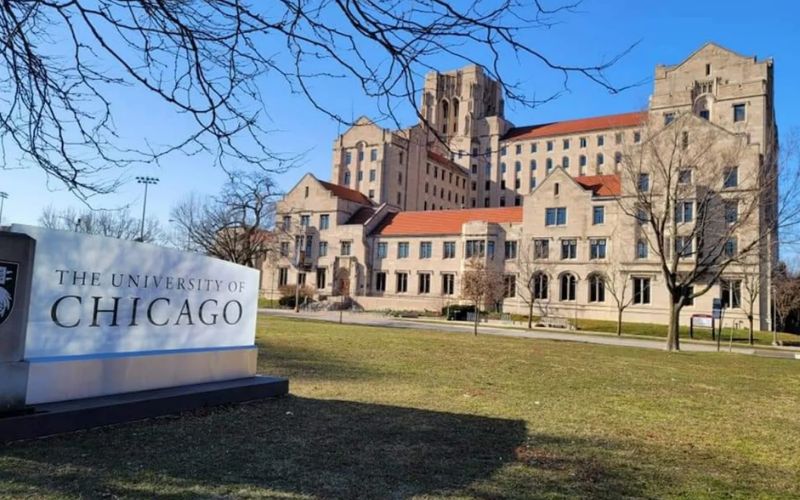
If there’s one university that is synonymous with economics, it’s the University of Chicago.
The “Chicago School of Economics” is a term you’ll hear constantly in economics circles and it refers to the intellectual tradition that has flourished at this institution for decades.
Chicago’s approach to economics is rooted in free-market principles, rigorous mathematical modeling, and a deep commitment to data-driven analysis. It’s an intellectually demanding environment that pushes students to think critically and challenge conventional wisdom.
Here’s why the University of Chicago stands out:
- Home to the Becker Friedman Institute for Economics, one of the leading economic research centers in the world
- Faculty that includes some of the most cited economists globally
- An economics curriculum that blends theory, econometrics, and policy analysis seamlessly
- Alumni network that includes Nobel laureates, policymakers, and leading academics
The undergraduate economics program at Chicago is equally strong, offering students early exposure to graduate-level thinking and research.
Estimated Annual Tuition: ~$62,500
If you’re serious about economics and want to study in a tradition that has genuinely changed how the world thinks about markets and policy, the University of Chicago belongs at the very top of your list.
Princeton University
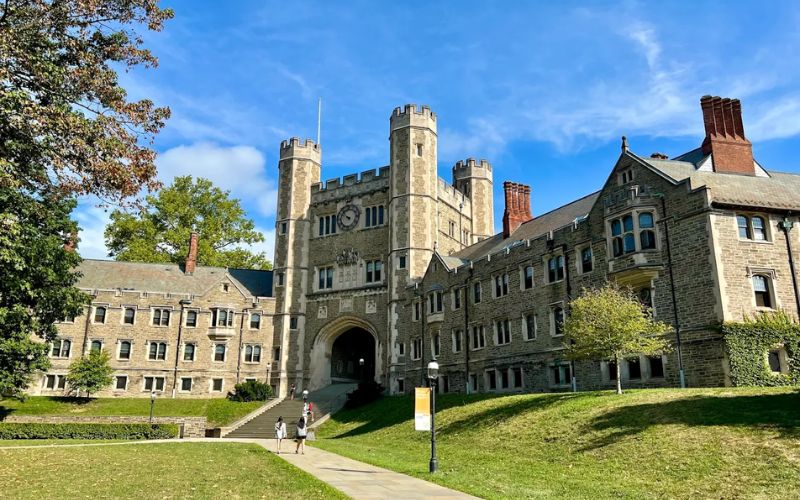
Princeton University may be smaller than many of its Ivy League peers, but its Economics department punches well above its weight.
Princeton has a long and distinguished history in economics. Faculty members here have held positions at the Federal Reserve, the World Bank, and have advised US presidents. The department is particularly well-known for its work in macroeconomics, international economics, and public finance.
One of Princeton’s biggest strengths is the quality of mentorship available to students. Because the university is smaller, students often have more direct access to faculty than they would at larger research universities.
Highlights of Princeton’s Economics program:
- Renowned faculty including former Federal Reserve Chair Ben Bernanke (alumni) and numerous Nobel laureates
- Access to Princeton’s Woodrow Wilson School of Public and International Affairs for students interested in policy
- Excellent placement rates for students pursuing graduate study or careers in finance and government
- Beautiful campus environment that fosters focused academic work
Estimated Annual Tuition: ~$59,710
Princeton is especially appealing for students who want a blend of serious academic rigor and a tight-knit, community-focused campus experience.
University of California, Berkeley
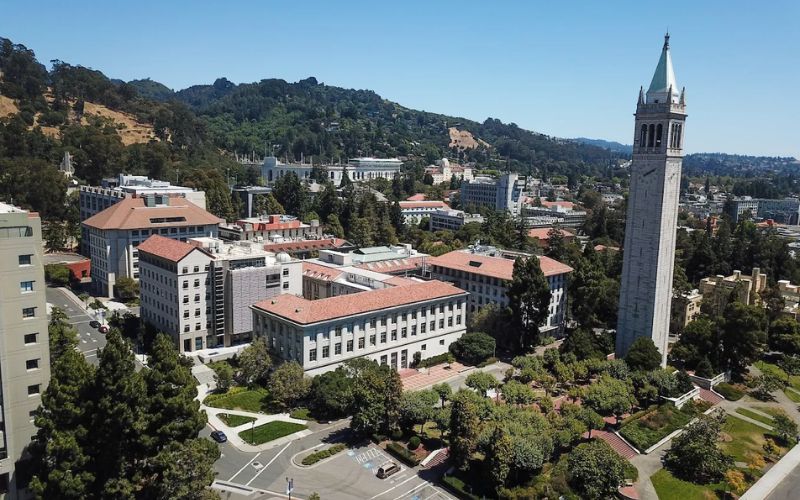
The University of California, Berkeley is one of the most respected public universities in the world, and its Economics department is a major reason why.
Berkeley’s Economics department has a rich tradition of academic excellence, progressive economic thinking, and policy-oriented research. The faculty here are deeply engaged with real-world issues, from income inequality and labor markets to climate economics and public health.
Berkeley encourages a wide range of perspectives and approaches to economic questions.
What Berkeley’s Economics program offers:
- Access to the Berkeley Institute for Research on Labor and Employment
- Strong emphasis on applied economics and public policy
- Excellent value for in-state students compared to private universities
- A vibrant, intellectually active campus culture in the San Francisco Bay Area
Berkeley is also a fantastic option for students who want to study economics in a socially conscious, policy-focused environment.
Estimated Annual Tuition: ~$14,500 (in-state) / ~$44,000 (out-of-state)
UC Berkeley is especially worth considering if you’re a California resident, the value for money compared to private Ivy League institutions is genuinely hard to beat.
Yale University
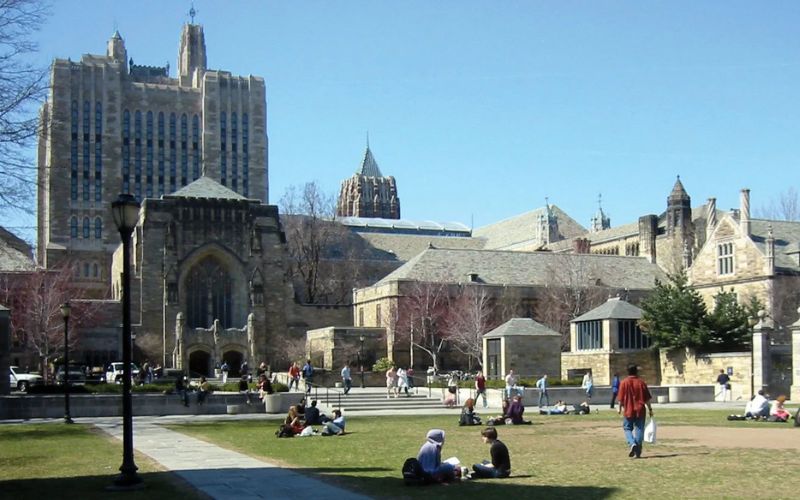
Yale University brings something a little different to the table when it comes to economics education. Yale’s Economics department is known for combining rigorous academic training with a strong emphasis on interdisciplinary learning.
Economics students at Yale frequently collaborate with the Law School, the School of Management, and the School of Public Health, giving them a broader perspective on how economic principles apply across different fields.
Yale is particularly well-regarded for its work in behavioral economics, financial economics, and economic history.
Key features of Yale’s Economics program:
- Strong emphasis on economic history and institutional economics
- Excellent undergraduate research opportunities through Yale’s senior essay requirement
- Faculty engaged in influential policy debates and international economic research
Yale’s smaller department size also means that students build close relationships with faculty, which can be invaluable when seeking research opportunities or letters of recommendation for graduate school.
Estimated Annual Tuition: ~$62,250
Columbia University
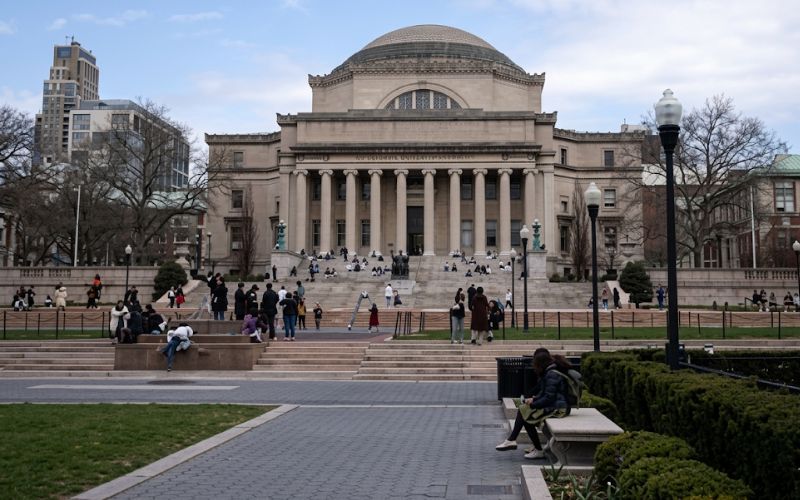
Columbia University’s location in New York City is one of its greatest assets for economics students.
Being situated in the financial capital of the world means that Columbia students have unparalleled access to internships, networking events, and career opportunities in finance, consulting, and economic policy. Wall Street is practically next door.
Columbia’s Economics department itself is strong in both theoretical and applied economics, with notable faculty working in areas like financial economics, urban economics, and international trade.
What Columbia brings to the table:
- Strong connections to Columbia Business School and the School of International and Public Affairs (SIPA)
- Faculty with deep ties to financial markets and international organizations
- Research centers focused on urban economics and global development
- Excellent opportunities for internships at major financial institutions and think tanks
Estimated Annual Tuition: ~$63,530
For students who want to combine a top-tier economics education with the energy and opportunities of New York City, Columbia is an outstanding choice.
New York University

New York University is another institution that benefits enormously from its New York City location, and its Economics department has been growing in reputation steadily over the past two decades.
NYU’s Economics department is particularly strong in game theory, macroeconomics, and econometrics. The faculty here includes some genuinely world-leading researchers who attract top graduate students from around the globe.
Highlights of NYU’s Economics program:
- Access to NYU Stern for finance and business-focused students
- Strong PhD program with excellent research output
- Vibrant, cosmopolitan campus environment in Greenwich Village
- Outstanding networking opportunities across New York City’s business and policy sectors
Estimated Annual Tuition: ~$58,000
NYU is a particularly strong choice for students interested in pursuing academic careers in economic theory or quantitative economics.
University of Pennsylvania

Rounding out our list is the University of Pennsylvania, home to the legendary Wharton School of Business, and an Economics department that benefits enormously from that connection.
Penn’s Economics department is strong across a wide range of fields, but it has a particularly well-deserved reputation in health economics, behavioral economics, and applied microeconomics.
What UPenn’s Economics program offers:
- Close integration with the Wharton School, one of the world’s top business schools
- Strong research focus in health economics, labor economics, and behavioral economics
- Excellent placement rates for students entering finance, consulting, and policy careers
- A collaborative, interdisciplinary academic culture across Penn’s various schools
Estimated Annual Tuition: ~$63,452
Penn is an ideal choice for students who want to blend rigorous economics training with practical business knowledge.
How to Choose the Right Economics University for You
With so many outstanding options, how do you actually decide? Here are a few practical things to consider:
- Think about your interests — are you drawn to theory, policy, or applied research?
- Consider the size of the department and how much faculty access matters to you
- Look at location and the career opportunities it creates
- Think about funding — public universities like Berkeley offer excellent value
- Research faculty — see who is doing research you find genuinely exciting
- Consider financial aid — all of these universities offer need-based aid packages that can significantly reduce the actual cost of attendance
Final Thoughts
The best economics universities in the US are all exceptional in their own right. Whether you’re drawn to Chicago’s free-market tradition, MIT’s data-driven approach, or Columbia’s New York City connections, there is a program on this list that will suit your goals and ambitions.
Take your time, do your research, and remember, the best university for you is the one that aligns with your interests, your career goals, and the kind of economist you want to become.
Your future in economics starts with the right choice today. Make it count.
FAQs
1. Which is the best university for economics in the US?
Harvard University is widely considered the best economics university in the US due to its Nobel laureate faculty and global prestige.
2. Which economics university is best for finance and Wall Street careers?
The University of Pennsylvania (Wharton) and Columbia University are the top choices for finance and Wall Street careers.
3. How much does it cost to study economics at a top US university?
Tuition ranges from $58,000 to $64,000 per year at top private universities, while UC Berkeley costs around $14,500 for in-state students.
4. Which university is best for economics if I want to become a researcher or professor?
Harvard, MIT, Princeton, and the University of Chicago are the strongest choices for aspiring researchers and professors.
5. Does studying at a top economics university guarantee a good job?
No, but graduating from a top economics program significantly improves your career prospects and employer visibility.